---
title: Reflecting on the Myth of Cassandra
description: A proposal for reflecting on the myth of Cassandra.
author:
name: Graciela Paula Caldeiro
url: http://graciela-caldeiro.idoneos.com
canonical: https://mitologiagrecorromana.idoneos.com/en/casandra/reflexionando_sobre_el_mito_de_casandra/
source: en/casandra/reflexionando_sobre_el_mito_de_casandra/index.md
---
Reflecting on the Myth of Cassandra
**Relevant topics:** The following are some of the themes that could be considered under this working proposal
- Foolishness
- Anticipating the future
Working proposals
**Basic reading material:**
[Click here to read the myth of Cassandra](/en/casandra/)
Questions for reflection in small groups, followed by a plenary discussion:
> - What might Apollo's curse symbolize?
>
> - Is it possible to anticipate what is to come, beyond "divination"? Why?
>
> - To what situations in today's life could Cassandra's predictions be compared?
>
> - What sometimes leads us not to believe in what everything indicates is truly going to happen?
>
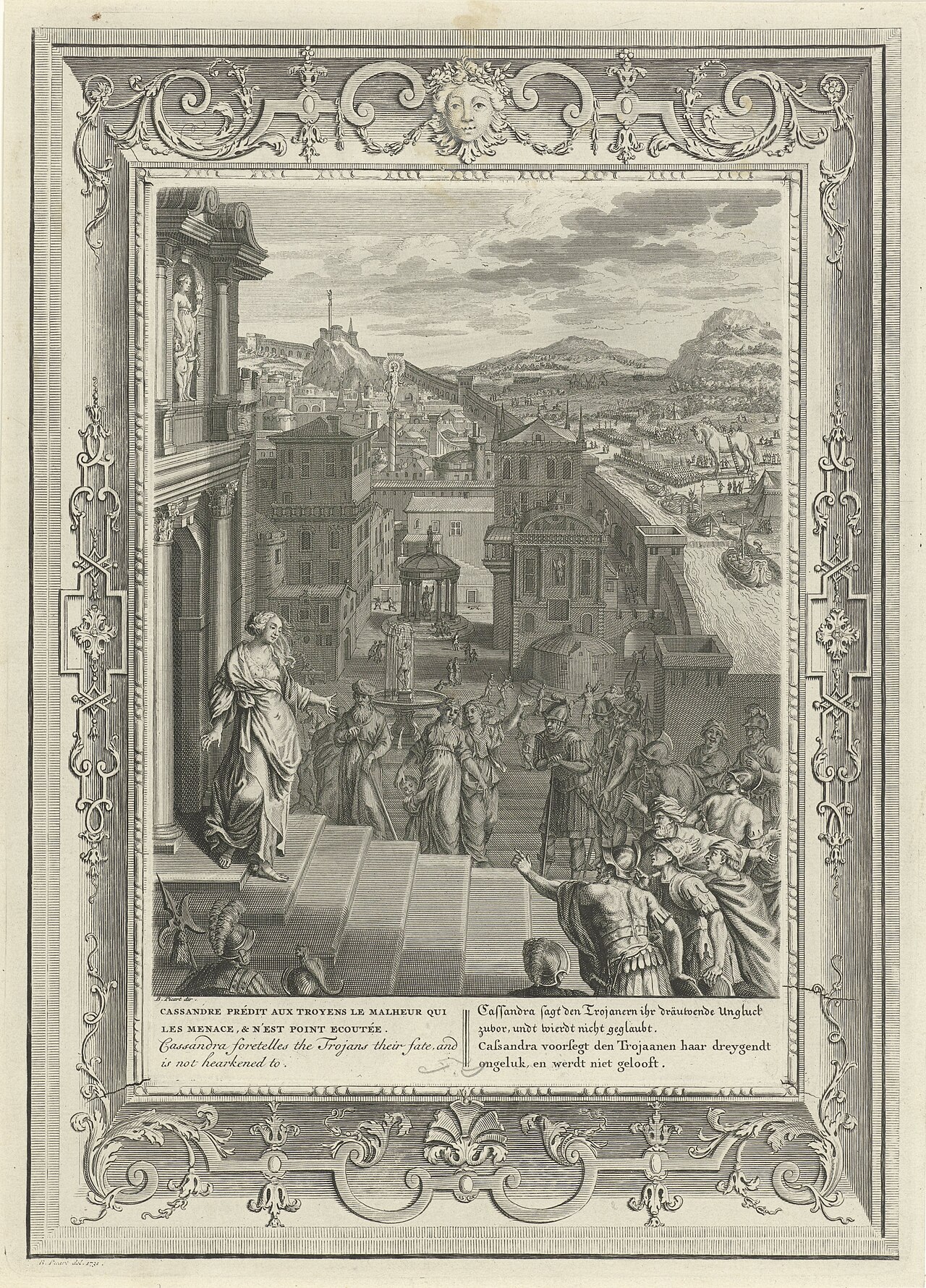
Cassandra predicts the fall of Troy. Bernard Picart (1731), Rijksmuseum. Source: Wikimedia Commons. CC0.
Other alternatives with a playful profile
> - Reflect on situations with a potential future impact in which society or individuals refuse to believe (examples: global warming, pollution, the effects of smoking, child malnutrition, social problems)
>
> - Divide the group into two teams and separately draw up highly probable predictions regarding a specific issue (for example, some group problem) and write them in a prophetic style. Then exchange the texts and consider the reasons why someone might refuse to accept such probable prophecies.
>