Aphrodite
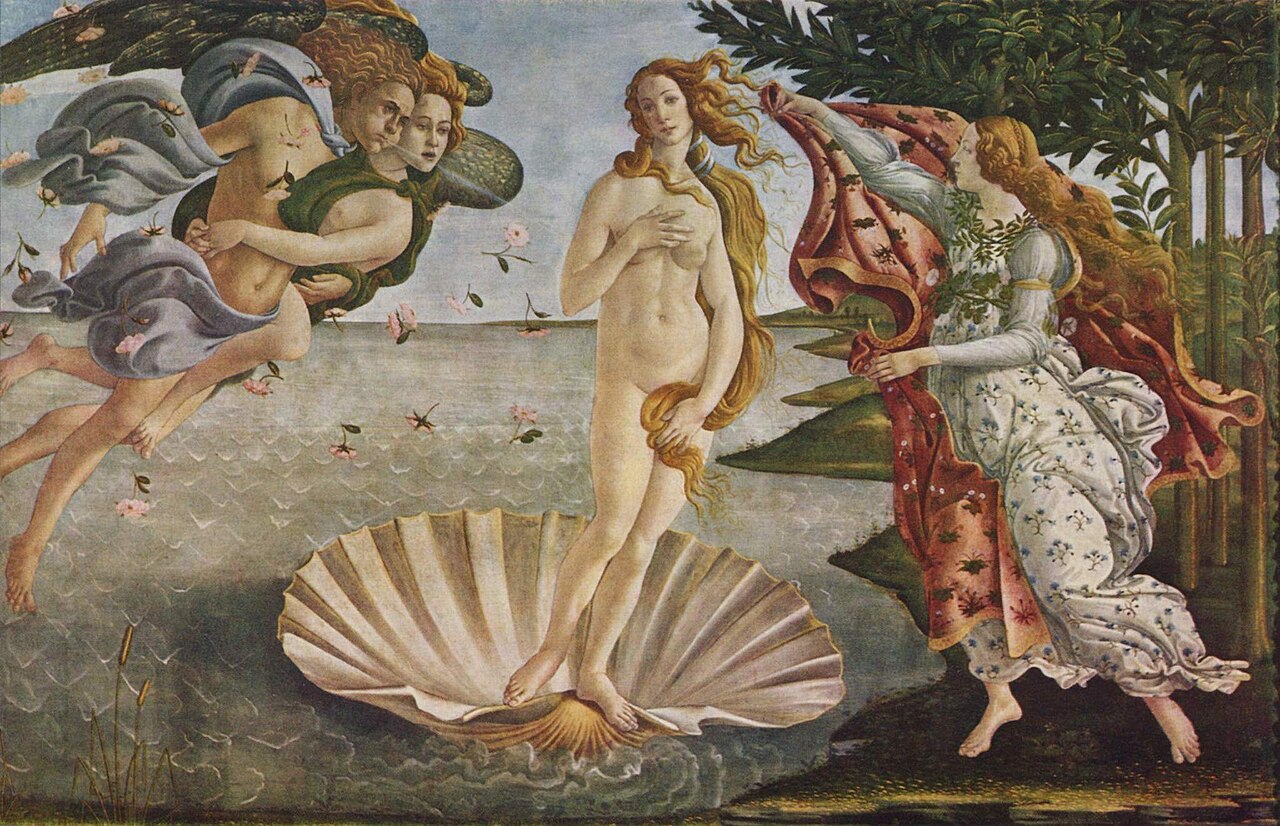
Source: Wikimedia Commons. Public domain.
The cult of Aphrodite originated on the island of Cyprus, strongly influenced by Near Eastern cults. In this regard she is associated with the goddess Ishtar (see mitologiasumeria). Indeed, the legend of her love for Adonis clearly recalls the story of Ishtar and Tammuz. The presence of prostitutes in the temple at Corinth is a familiar echo of what took place in the temples of Ishtar. Herodotus notes that it was Babylonian custom for all women to prostitute themselves once in the temple of the goddess, which also occurred in Cyprus.
Aphrodite is, in effect, the goddess of love. Her sole interest was therefore to make love. On one occasion, when Aphrodite was working at a loom, Athena, goddess of the arts, protested vigorously at this invasion of her domain. Aphrodite humbly begged forgiveness and from that time on never again dared to work.
According to some sources, Aphrodite was a daughter of Zeus, although according to the account of Hesiod, she was born from the sea-foam that formed around the genitals of Uranus after he had been castrated by Cronus and his testicles cast into the sea. The drops of blood were transformed into the Erinyes, the Giants, and the ash-tree nymphs known as the Meliae. Aphrodite came ashore at Paphos, in Cyprus. As she stepped onto land, grass sprang up beneath her feet. She is also called Anadyomene, “she who emerges.” From the very beginning Eros (desire) accompanies her.